
Bohol Travel Guide
Complete Bohol Travel Guide 2026 — Chocolate Hills, Beaches, Wildlife & Hidden Gems
Where 1,268 chocolate-colored hills meet pristine reef and the world’s smallest primates are watching from the trees
Bohol is not one destination. It’s six, stacked in layers — from the white-sand coast of Panglao to the limestone highlands of Carmen, from the colonial coral-stone churches of Baclayon to the cave pools of Anda’s east coast. You can spend a full week in Panglao diving reefs and eating fresh grilled fish and never cross the bridge to the mainland. Or you can go the other direction — base yourself near the Chocolate Hills, wake up to a sunrise over 1,268 limestone mounds, float down the Loboc River on a bamboo raft, and not touch a beach until day four.
That’s Bohol. It rewards whatever pace you choose, and it always has more than you expected when you landed.
This is the master guide. Every destination, every experience, every article on this site connects back here. Whether you’re planning your first Bohol trip or your fourth, start here — then follow the links down to the details you need.
“I came for three days and stayed for ten. Every time I thought I’d seen Bohol, another road opened up — rice paddies, a Spanish-era tower, a village where they still make kalamay by hand. I’ve never felt so welcomed anywhere in Southeast Asia.”
— Martina K., Berlin ⭐⭐⭐⭐⭐
🔗 Ready to experience it? Experience Bohol’s most iconic highlights — Chocolate Hills, tarsiers, and a Loboc River cruise — on this top-rated day tour. Book the Bohol Chocolate Hills & Tarsier tour on GetYourGuide →
Why Bohol Stays With You
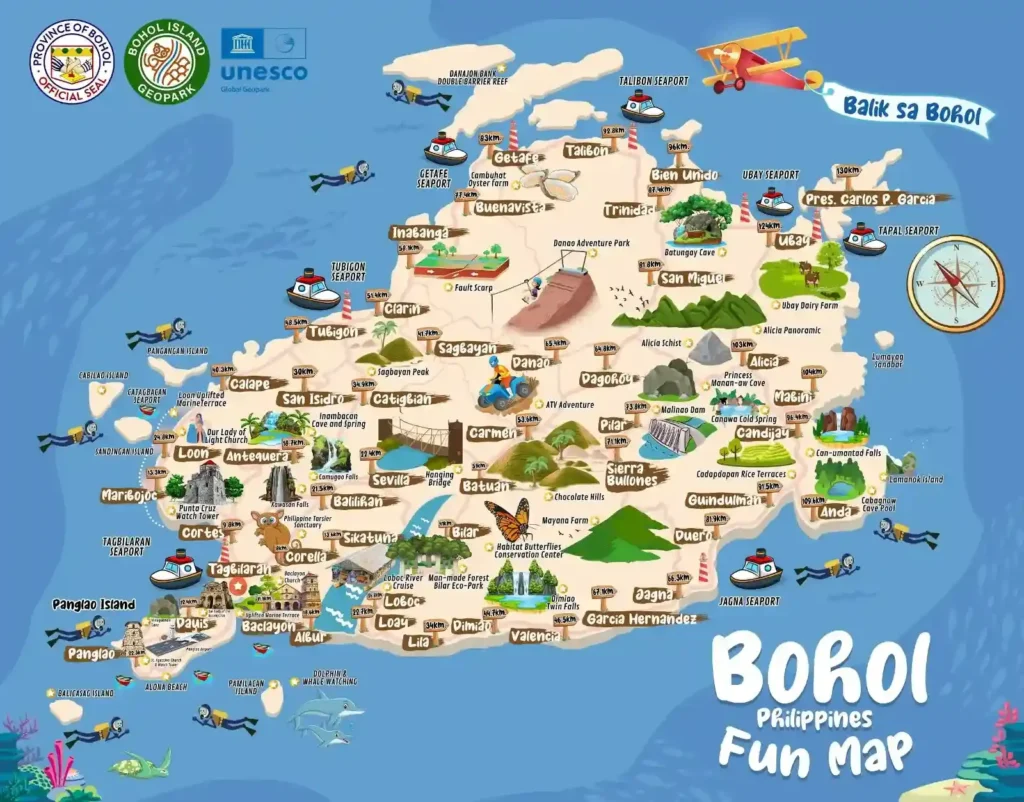
Bohol covers 4,821 km² and 48 municipalities, but it doesn’t feel overwhelming — it feels curated. The distances are manageable. The people are open. And the variety is genuinely rare: you’ll find world-class reef diving 25 minutes from a UNESCO-listed colonial church, a tarsier sanctuary two kilometers from a floating river restaurant, and one of the Philippines’ most remote east coast hideaways just three hours from the main ferry port.
Here’s what makes Bohol different from every other Philippine island:
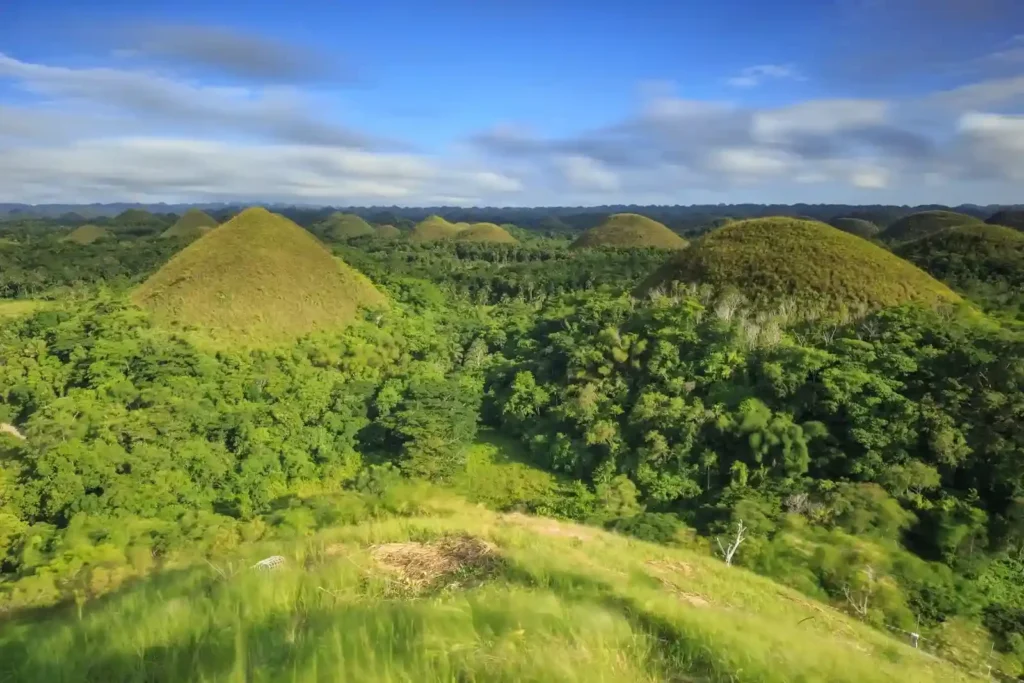
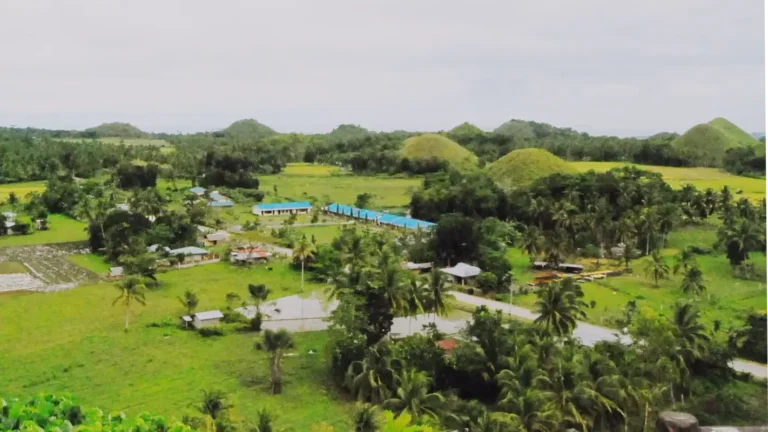
The Chocolate Hills. 1,268+ perfectly cone-shaped limestone formations across 50 km² in Carmen, Batuan, and Sagbayan. Nowhere else on earth looks like this. During the dry season (November–April) the grass covering them turns deep chocolate brown — the origin of the name. In the wet season they glow emerald green. Both versions are worth the trip.
The Philippine Tarsier. Bohol is one of the last places on earth where you can see tarsiers in a natural-habitat sanctuary. These are the world’s smallest primates — palm-sized, with eyes larger than their brains. The 134-hectare Tarsier Sanctuary in Corella is run in full cooperation with conservation groups. Silence is required. Touching is never allowed. The experience is unlike any wildlife encounter in the region.
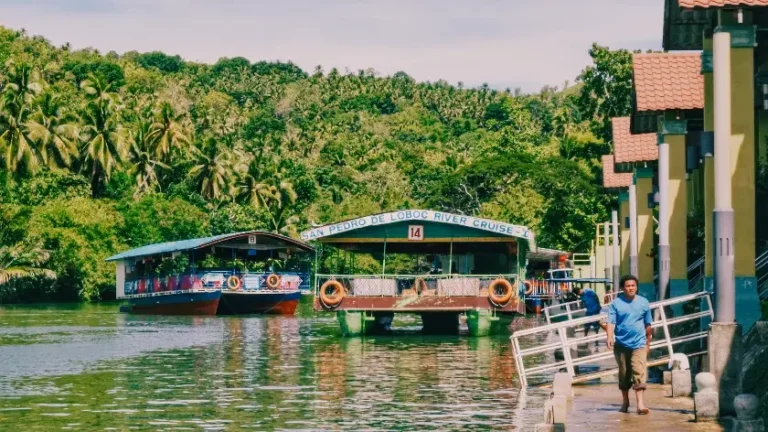
The River System. The Loboc River flows 47 km through jungle-dense valleys before reaching the Bohol Sea. Floating restaurant cruises run from the river mouth. Kayaks and stand-up paddleboards push upstream past carabao-grazed riverbanks. Firefly cruises run at dusk. It’s the same river, four completely different experiences.
The Coral Reefs. Balicasag Island, 6.5 km southwest of Panglao, holds some of the most intact wall dives in the Visayas — over 250 fish species, green sea turtles, and a resident school of jackfish. Panglao’s Napaling reef hosts sardine runs that rival Moalboal. The east coast around Anda has reefs most divers in the Philippines haven’t found yet.
The Heritage. Baclayon Church, built in 1596 from coral stone and lime, is one of the oldest stone churches in the Philippines. The Blood Compact Shrine in Tagbilaran marks the site of the first recorded peace treaty between the Spanish and the Visayan people in 1565. Bohol’s heritage isn’t preserved in museums — it’s still standing, still active, still part of daily life.
Bohol Destinations — Your Complete Map
This section maps every major destination hub on the island. Published guides are linked. Pages in development are marked as coming soon — check back as new content goes live throughout 2026.
🏝️ Panglao Island
Panglao Island sits 91.12 km² off the southwestern tip of Bohol, connected to the mainland by two short bridges. It holds Alona Beach, Bohol’s most famous stretch of white sand, plus some of the best reef diving in the Central Visayas. Most first-time visitors to Bohol base themselves here — with good reason. Hotels run from budget bamboo guesthouses to private-pool beachfront resorts.
→ Panglao Island Complete Guide — beaches, diving, getting there, where to stay
→ Alona Beach Guide — the 1.5 km stretch: dive shops, restaurants, accommodation tiers
→ Best Alona Beach Hotels — reviewed and ranked
→ Panglao Luxury Resorts — private pools, beachfront villas, full-service resorts
→ Boutique Hotels in Panglao — smaller properties with character
→ Balicasag Island — sea turtles, wall dives, snorkeling tours
🌄 Chocolate Hills & The Bohol Highlands
The Chocolate Hills area covers the central highlands of Bohol, centered on the municipality of Carmen, 55 km northeast of Tagbilaran. This is where the island’s most iconic natural landmark sits — but the highlands offer far more than one viewpoint. The Bilar Man-Made Forest runs 2 km along the highway in a dense mahogany tunnel. The Tarsier Sanctuary in Corella is a 20-minute drive. The River Loboc begins here. And the countryside tour — the most popular full-day experience in Bohol — connects all of them.
→ Chocolate Hills Complete Guide — the full Bohol highlands hub
→ Countryside Tour Guide: Chocolate Hills, Tarsier & Loboc — the full-day route explained
→ Private, Shared or DIY: Chocolate Hills Tour Comparison
→ Best Hotels Near the Chocolate Hills
→ Tarsier Sanctuary Guide — Corella
→ Bilar Man-Made Forest
→ Loboc River Cruise Guide
🏙️ Tagbilaran City & Southern Bohol
Tagbilaran City is Bohol’s capital and its main entry point — all ferries from Cebu, Manila, and Cagayan de Oro dock at the ICM Port here. It’s a compact city of 32.7 km², easy to navigate on foot for the heritage district and by tricycle everywhere else. Most travelers treat it as a transit base, but Tagbilaran’s colonial quarter — Baclayon Church, the National Museum, the Tagbilaran Cathedral, the Blood Compact Shrine — rewards a slow morning if you have it.
→ Tagbilaran City Complete Guide — the city hub for Bohol’s capital
→ Tagbilaran Hotels Near ICM Port — sorted by ferry transfer convenience
→ Tagbilaran Ferry Transfer Hotels
→ Affordable Hotels in Tagbilaran
→ Baclayon Church Heritage Guide
→ Blood Compact Shrine — Bohol
→ Tagbilaran Cathedral
→ Bohol National Museum
🌊 Anda — Eastern Bohol’s Hidden Coast
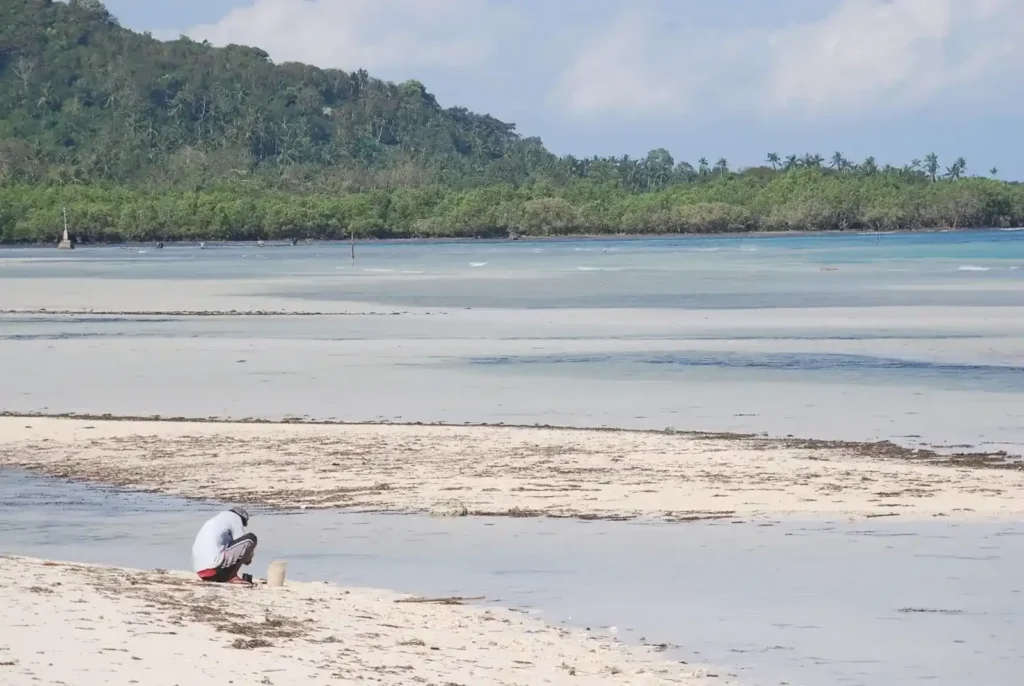
Anda sits on the eastern tip of Bohol, 117 km from Tagbilaran — about 2.5 hours by car. It’s the island’s best-kept secret: a stretch of coast with clear-water cave pools, white sand beaches that see a fraction of Panglao’s crowds, and resorts that have the reef almost to themselves. If you’ve done Alona Beach and want something quieter, Anda is the answer.
→ Anda Bohol Complete Guide — eastern Bohol explained
→ Anda Beachfront Resorts
→ Anda Bohol Resorts & Accommodation
→ Best Eastern Bohol Tours & Hidden Gems
→ Private Bungalows in Anda
🌿 Loboc & The River Towns
The Loboc River valley is one of Bohol’s most atmospheric areas — thick jungle canopy, traditional fishing villages, and one of the most picturesque river cruises in the Philippines. The town of Loboc sits 24 km from Tagbilaran along the road to Carmen. Beyond the river, Loay and Bilar fill out a cluster of riverside municipalities that reward slow exploration.
→ Loboc & River Towns Complete Guide — the river valley hub
→ Loboc River Cruise — Complete Guide
→ Loboc River Hotels
→ Private Evening Firefly Watching Cruise
→ Sipatan Hanging Bridge — Loboc
🗺️ Bohol Map & All Municipalities
(Full geography hub in development — coming soon)
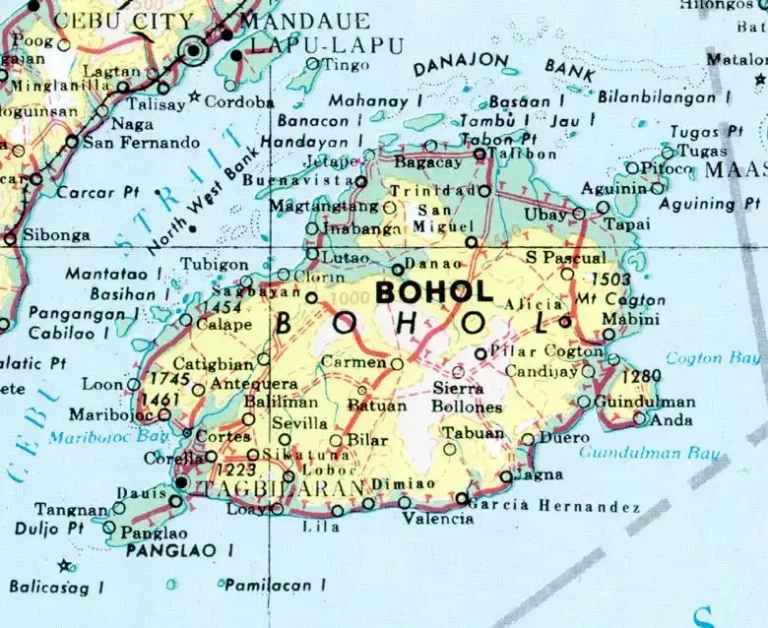
Bohol has 48 municipalities and one city, spread across an island that takes two to three hours to drive end to end. The map hub will cover every municipality with its main attraction, distances from Tagbilaran, and what kind of traveler it suits.
→ Bohol Map — 19 Must-Visit Attractions + Where to Book Tours
→ Bohol Bus Routes Guide — how to get between municipalities without a car
→ Bohol Municipalities Guide — overview of all 48 municipalities
→ Bohol Geography & Island Overview — island layout and geography
🤿 Beaches, Diving & Island Adventures
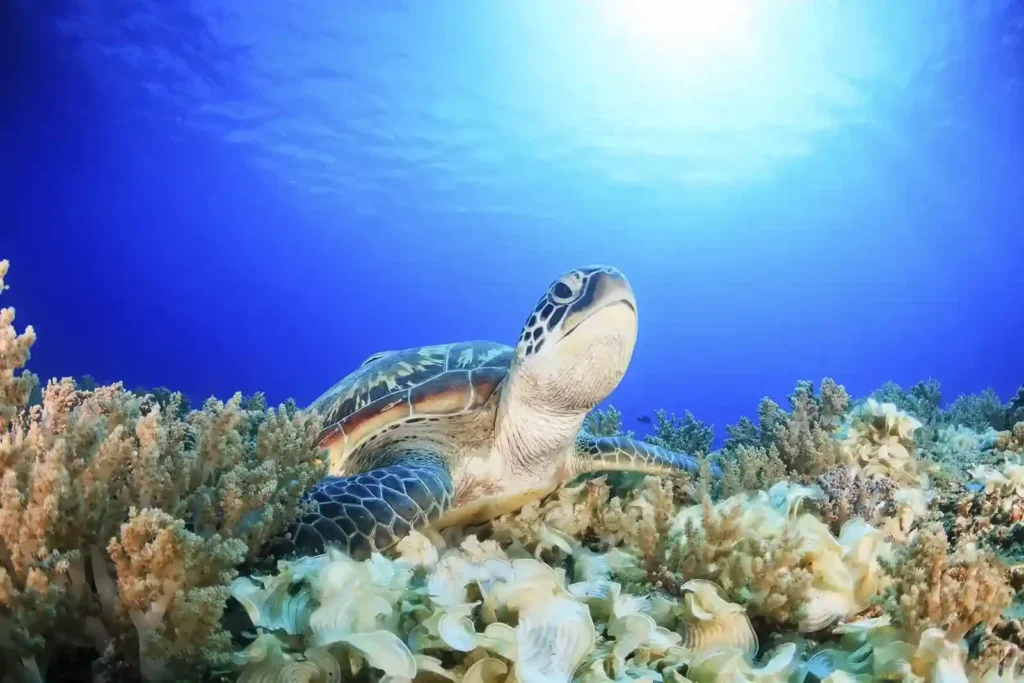
Bohol’s reef system is one of the most diverse in the Central Visayas. Balicasag Island holds a marine sanctuary with wall dives, turtle-cleaning stations, and a resident school of barracuda. The Napaling reef off Panglao is famous for sardine runs that draw hundreds of divers. The east coast around Anda has untouched coral gardens most of the diving world hasn’t reached yet.
“We dove Balicasag four days in a row. Wall dives, turtle encounters, nurse sharks resting on the sandy bottom at 18 meters. For the price we paid, it’s the best diving value I’ve found in Southeast Asia.”
— Sean R., Melbourne ⭐⭐⭐⭐⭐
→ Most Spectacular Bohol Beaches
→ Balicasag Island — Marine Sanctuary Guide
→ Bohol Island Hopping Guide — the complete island hopping hub
→ Best Bohol Island Hopping Tours
→ Top 10 Marine & Island Adventures in Bohol
→ Virgin Island Sandbar Tour
→ Pamilacan Island — Dolphin & Whale Watching
🔗 Book the Bohol Chocolate Hills & Tarsier tour on GetYourGuide →
🦎 Wildlife & Eco-Tourism
Bohol punches far above its weight on wildlife. The tarsier is the headline attraction, but the island also holds endemic species of butterfly, python, and flying lemur that exist nowhere else on earth. The dive sites are marine-protected areas. The man-made forest at Bilar is a working reforestation project that’s grown into one of the most photographed drives in the Philippines.
Philippine Tarsier Sanctuary — Corella
One of the last places in the world where tarsiers live in a fully wild, unenclosed sanctuary. They move freely through the trees. You walk silently on elevated viewing platforms and wait for them to settle. No flash photography, no touching, no loud voices. The sanctuary covers 134 hectares and is managed with strict visitor limits to protect the animals.
→ Corella Tarsier Sanctuary
→ The Science Behind the Tarsier
→ Bohol Wildlife & Eco-Tourism Experiences
→ Hinagdanan Cave — Limestone & Lagoon
→ Best Caves for Spelunking in Bohol
→ Bilar Man-Made Forest Guide
→ Top 10 Bohol Waterfalls & Springs
→ Discover Hidden Waterfalls in Bohol
🏛️ Heritage & History
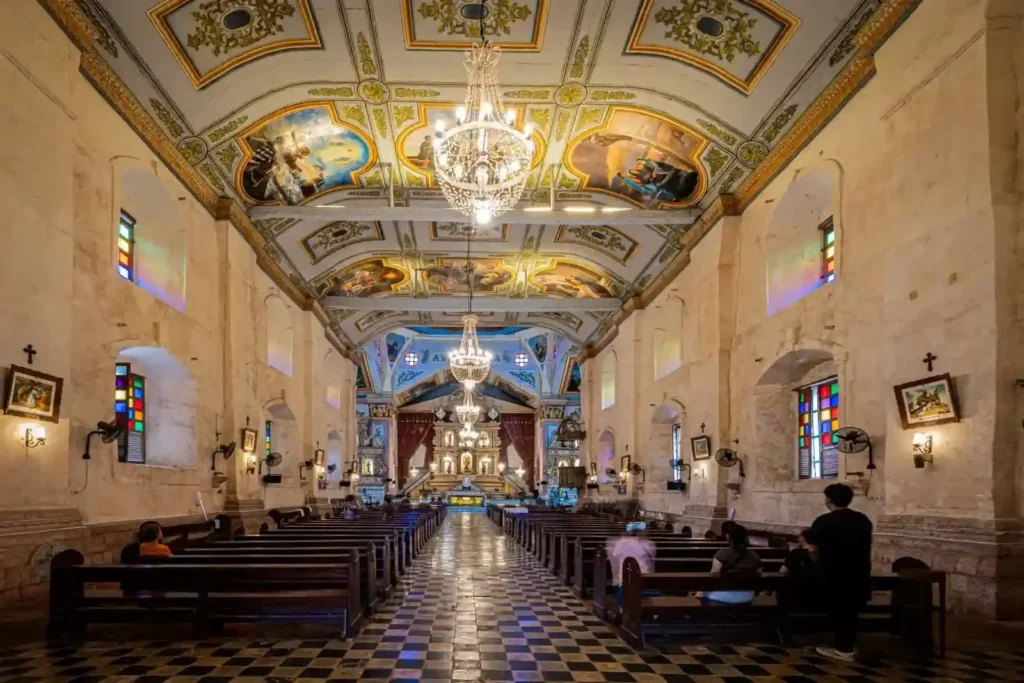
Bohol has some of the oldest Spanish colonial architecture in the Philippines, and it’s not behind glass — the churches are still in active use, the plazas are still social centers, and the heritage district in Tagbilaran is still the morning walk route for locals. The Baclayon Church has been standing since 1596. The Blood Compact Shrine marks the exact location of the first recorded peace treaty between Spain and the Visayan people — 1565, two years before the Augustinian church in Manila was even built.
→ Baclayon Church & Heritage Architecture
→ Baclayon Bohol Travel Guide
→ Blood Compact Shrine — Complete Guide
→ Bohol Churches & Belfries Heritage Tour
→ Bohol National Museum
→ Tagbilaran Cathedral
→ Top 10 Cultural & Historical Sites in Bohol
🪂 Adventure Activities
Danao Adventure Park sits 650 meters above sea level in the Bohol highlands, 2–2.5 hours from Tagbilaran. The Plunge is a controlled freefall off a cliff face into the canyon below. The zipline runs the length of the gorge. There’s also rappelling, wall climbing, and a 4WD river crossing. It’s not a theme park — the adventure is real.
→ Danao Adventure Park — Complete Guide
→ Top 10 Bohol Adventure Activities
→ Sea of Clouds at Alicia Panoramic Park
→ Top 10 Bohol River & Water Activities
→ 15 Epic Bohol & Cebu Adventures
→ 77 Things to Do in Bohol
🚢 Bohol Tours — Book Before You Arrive
The Bohol countryside tour — Chocolate Hills viewpoint, tarsier sanctuary, Loboc River cruise, Blood Compact Shrine, Baclayon Church — is the most booked single-day experience in the province, and it books out during peak season (December–April). Book this before you fly into Cebu.
→ All Bohol Tours ← main tours hub
→ How to Book a Bohol Countryside Tour
→ Best Bohol Countryside Tours on GetYourGuide
→ Cebu to Bohol Day Tours
→ Best Day Tours From Bohol
→ Top 25 Bohol & Cebu Tour Experiences
🏨 Where to Stay in Bohol
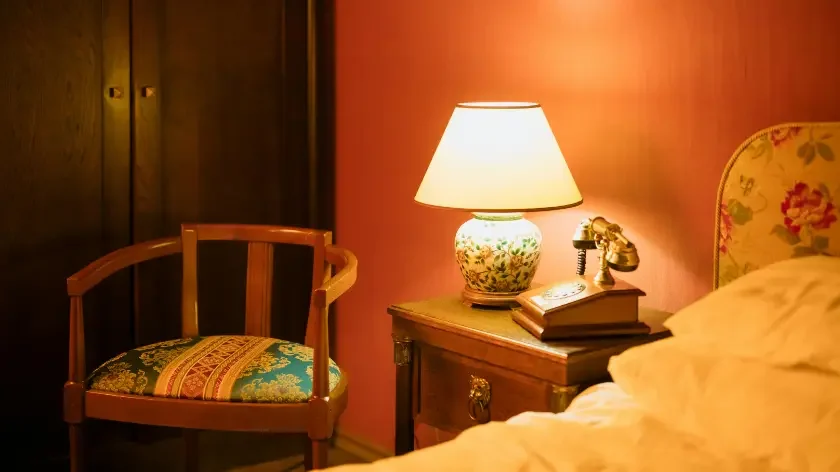
Bohol has accommodation to match every budget and travel style — from beachfront private-pool villas in Panglao to family-run guesthouses in Anda’s fishing villages. The right choice depends on where you want to wake up each morning.
By Location:
| Area | What You Get | Best For |
|---|---|---|
| Panglao / Alona Beach | Beach access, dive boats, nightlife | First-timers, divers, couples |
| Tagbilaran City | Ferry proximity, city amenities | Transit stopovers, early departures |
| Carmen / Chocolate Hills | Sunrise over the hills, quiet highlands | Nature lovers, photographers |
| Loboc / River Towns | River access, eco-lodges | Slow travelers, couples |
| Anda | Remote beach coves, cave pools | Repeat visitors, off-grid stays |
→ All Bohol Hotels ← main hotels hub
→ Best Alona Beach Hotels
→ Panglao Luxury Resorts
→ Boutique Hotels in Panglao
→ Best Chocolate Hills Hotels
→ Anda Bohol Resorts
→ Loboc River Hotels
→ Affordable Hotels in Tagbilaran
→ Bohol Budget Hotels
→ Luxury Bohol Resorts
→ Family Resorts in Bohol
→ Eco Resorts & Farm Stays
🔗 Compare all Bohol hotels and resorts on Booking.com — free cancellation available →
🔗 Also check Agoda for competitive Bohol rates →
🚢 Getting To & Around Bohol
How to Arrive
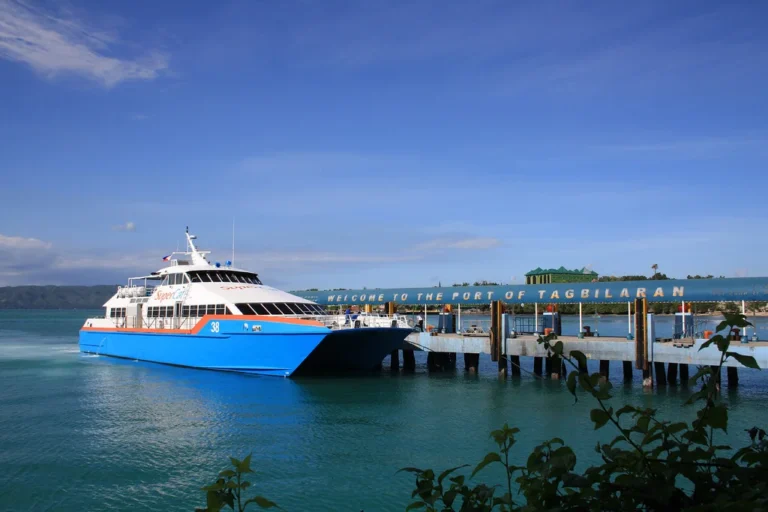
The main gateway is Tagbilaran ICM Port — ferry terminal receiving routes from Cebu City (2 hours, ~72 km), Manila (Superferry), and Cagayan de Oro. Ferries run multiple times daily from Cebu City’s Pier 1. Panglao International Airport (TAG) handles domestic flights from Manila (Cebu Pacific, Philippine Airlines), Cebu, and Davao.
Getting Around
Bohol has no metro system. Transportation options in order of practicality:
- Private rental car or van — most efficient for families and groups covering multiple destinations in one day
- Tricycle — for short in-town distances in Tagbilaran and within Panglao
- Habal-habal (motorcycle taxi) — for inter-barangay routes where tricycles don’t reach
- Bus / jeepney — cheap routes between Tagbilaran, Loboc, Carmen, Anda, and Jagna; slow but local
→ How to Get to Bohol by Ferry
→ Bohol Bus Routes Guide
→ Getting Around Bohol — Tips
→ All Transportation Guides ← transport hub
🍜 Bohol Food & Pasalubong
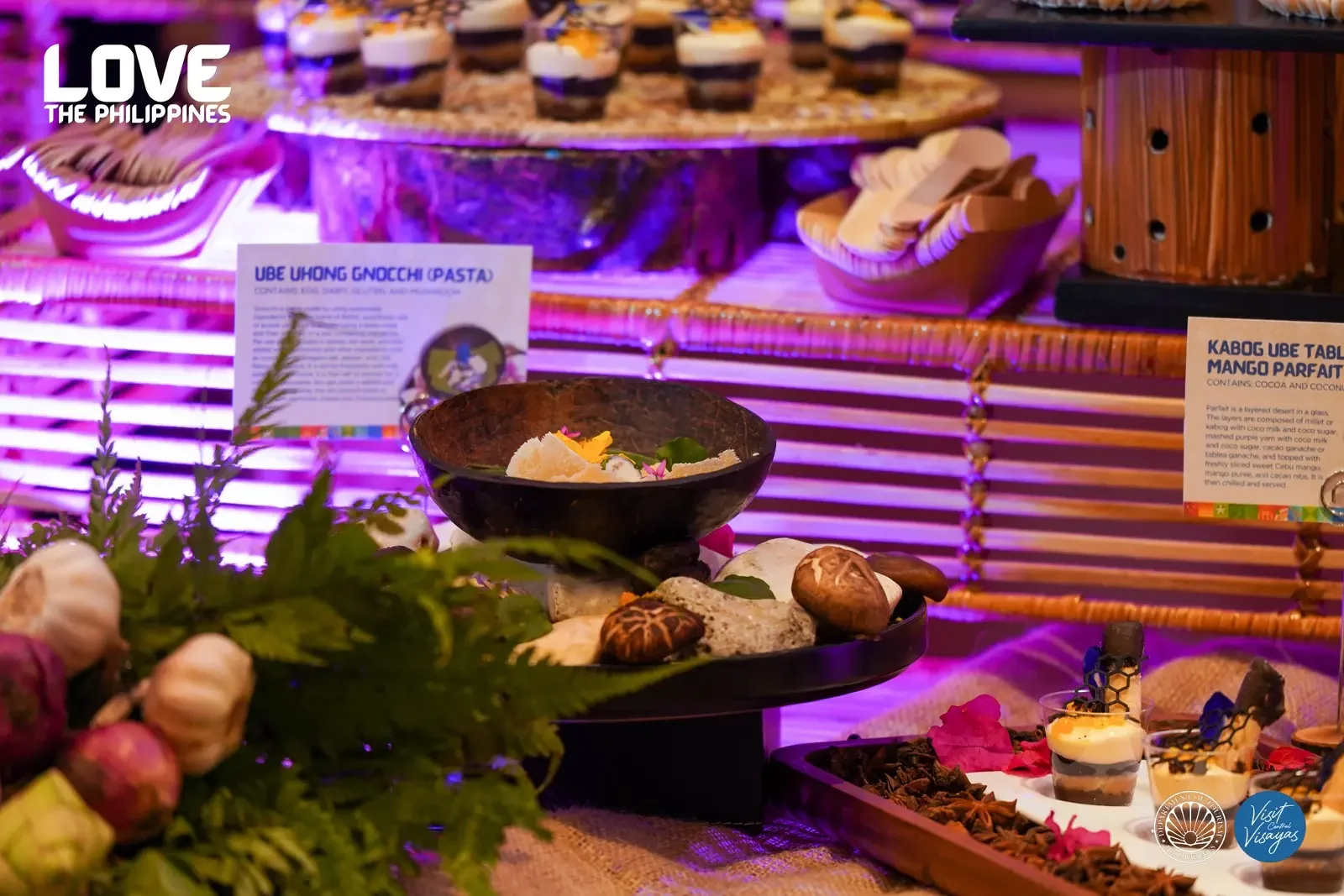
Bohol has a distinct food culture that traces directly from Spanish, Chinese, and Visayan indigenous influences. The must-try before you leave:
Bohol Kalamay — sticky rice cooked down with coconut milk and sugar, poured into coconut shells, and sold warm at roadside stalls in Jagna and Tagbilaran. It’s the island’s most iconic food souvenir and the one thing locals will ask if you tried.
Peanut Kisses — bite-sized peanut-and-sugar bonbons wrapped in paper cones. Every pasalubong shop carries them, and they disappear fast. They’re Bohol’s answer to the airport souvenir and they’re genuinely good.
Fresh Seafood — grilled, fried, or kinilaw (vinegar-cured, similar to ceviche). Alona Beach’s beachfront restaurants grill whole fish daily. The morning markets in Tagbilaran and Jagna are where locals source the same catch.
→ Bohol Kalamay — Complete Guide
→ Bohol Peanut Kisses Guide
→ Bohol Shopping & Pasalubong Guide
→ Where to Eat in Bohol ← dining guide
📅 Best Time to Visit Bohol
Bohol is a year-round destination. The two seasons change what you get, not whether to go.
Dry Season — November to April (Amihan / Northeast Monsoon)
Peak tourist season. Calm seas, clear skies, optimal diving visibility. December to April is the busiest stretch — book accommodation 3–6 months ahead if you’re visiting during Holy Week (March/April) or Chinese New Year. Panglao beachfront rooms sell out first.
Wet Season — May to October (Habagat / Southwest Monsoon)
30–50% lower hotel rates. Greener landscapes. The Loboc River valley is at its most lush. Afternoon rain showers are short and warm. Diving continues — visibility drops slightly but the reef activity increases. Sandugo Festival in Tagbilaran runs every July.
Sweet Spot — October to November
Improving weather, pre-peak pricing, and none of the Holy Week crowds. The best time to visit Bohol if you have flexibility.
| Season | Conditions | Book Ahead? | Notes |
|---|---|---|---|
| Dec–Apr | Dry, clear, peak | Yes, 3–6 months | Holy Week = full capacity |
| May–Jun | Transitional | 1–2 months | Rain starts, prices drop |
| Jul–Sep | Wet, lush, lower prices | 2–4 weeks | Sandugo Festival in July |
| Oct–Nov | Improving, quieter | 2–4 weeks | Best value window |
🎉 Bohol Festivals & Events
Sandugo Festival — July, Tagbilaran City. Bohol’s biggest annual festival commemorates the 1565 blood compact (sandugo) between Datu Sikatuna and Spanish explorer Miguel de Legazpi — the first recorded treaty between the Philippine people and a colonial power. Street dancing, reenactments, and celebrations run through the full month.
Flores de Mayo — May, throughout Bohol. Fiesta season in every municipality. The streets come alive with floral processions.
Holy Week Processions — March/April, Tagbilaran and all towns. Some of the most moving Semana Santa traditions in the Visayas.
→ Best Bohol Festivals & Fiestas Guide
Book Bohol Transfers Today
Bohol Geography & Maps for Travelers – Distances, Attractions & How to Get Around
Title: Bohol Geography & Maps for Travelers – Distances, Attractions & How to Get Around Description: Discover Bohol’s geography with maps, distances, and key attractions. Learn how to explore Bohol’s islands, hills, rivers, and caves with…
Bohol Birdwatching Guide – Where to Spot Endemic & Migratory Birds
The first light of dawn breaks through the canopy at Rajah Sikatuna Protected Landscape, and suddenly the forest erupts in a symphony of calls. A flash of azure and orange catches your eye – the rare…
Bohol Kalamay: The Chemistry, Craft, and Culture of Jagna’s Indigenous Confection
The wooden ladle never stops. For four hours — sometimes longer — a maker in Jagna stands over a clay-fired kawa (large wok), folding a thickening paste of coconut milk, glutinous rice, and muscovado sugar against…

Practical Bohol Travel Guide: Tips & Logistics
Currency & Money
Philippine Peso (₱). ATMs are reliable in Tagbilaran and Panglao. In Anda and more remote towns, bring enough cash for your stay — ATMs may be limited.
SIM Cards & Connectivity
Buy a prepaid SIM at the Tagbilaran ferry terminal or airport immediately on arrival. Smart and Globe cover the main areas well. Anda and more remote barangays may have weaker signal.
Power & Electricity
220V / 50Hz. Philippines uses Type A and Type B sockets (same as US/Japan flat-pin). European visitors bring an adapter.
Language
Bisaya (Visayan/Cebuano) is the primary language throughout Bohol. Filipino (Tagalog) is widely understood. English is spoken at all hotels, tour operators, and restaurants in tourist areas. In remote barangays, English comprehension is more limited — a smile and simple phrases go a long way.
Safety
Bohol is one of the Philippines’ safest tourist provinces. Standard precautions apply: keep valuables secured in hotels, be cautious with after-dark tricycle rides in unfamiliar areas, check weather forecasts before any sea activity.
→ Philippines Travel Insurance Guide
→ Best Philippine Travel Apps
→ Travel Essentials Hub
“Ten days in Bohol and we barely scratched the surface. We needed at least a month. The beaches alone could fill a week. Then there’s Anda, the highlands, the churches, the river, the food markets — we’re already planning our second trip, probably staying near Anda.”
— Sophie R., Paris ⭐⭐⭐⭐⭐
Book Bohol Tours Today
5 Best Eastern & Anda Bohol Tours: Hidden Gems & Off-the-Beaten-Path Adventures
Off the Beaten Path of Anda & Eastern Bohol Imagine stepping off the beaten path in Bohol and discovering landscapes that few tourists ever see. Eastern Bohol—home to Anda, Candijay, and Alicia—is a treasure trove of…
7 Best Cebu to Bohol Day Tours: Inter-Island Adventures Made Easy
With Cebu to Bohol day tours you can be departing Cebu City at sunrise aboard a comfortable fast ferry, watching the Philippine archipelago’s emerald islands pass by as you sip morning coffee. By 9 AM, you’re…
10 Best Bohol Countryside Tours: Chocolate Hills, Tarsiers & Loboc River Adventures
Picture yourself standing atop the Chocolate Hills Complex viewing deck as golden hour light transforms over 1,268 cone-shaped limestone mounds into nature’s perfect geometric masterpiece. With the Bohol Countryside Tours, you can witness the emerald countryside…
Things to Do in Bohol — Monthly Guides
Every month in Bohol offers something different. The monthly guides below are updated seasonally and cover the best activities, events, and conditions for each period.
→ All Monthly Guides ← things-to-do hub
→ 77 Things to Do in Bohol & Cebu
Bohol & Cebu — The Two-Island Combination
Bohol and Cebu sit 72 km apart across the Bohol Sea — about two hours by ferry. They’re the most natural two-island combination in the Philippines: use Cebu City (via Mactan Airport) as your international entry point and add Bohol as a 3–7 day extension, or vice versa.
The most popular cross-island addition from Bohol: a day trip to Cebu for whale shark watching in Oslob, canyoneering at Kawasan Falls, or the Cebu City historical circuit.
→ Cebu Travel Guide
→ Cebu to Bohol Day Tours
→ Best Cebu Tours & Activities
Frequently Asked Questions — Bohol Travel Guide
Why is Bohol worth visiting over other Philippine islands?
Few Philippine islands pack this much variety into one manageable trip. You can dive Balicasag Island’s reef walls in the morning, stand above 1,268 Chocolate Hills by mid-afternoon, float the Loboc River at dusk, and wake up to a white-sand beach in Panglao the next day — all without a single domestic flight. Add a tarsier sanctuary set in 134 hectares of natural forest, four centuries of coral-stone church architecture still in active daily use, and a quiet east coast at Anda that most tourists haven’t found yet. Bohol rewards first-timers and repeat visitors equally.
How many days do I need in Bohol?
Minimum 3 days covers the essentials: Chocolate Hills viewpoint, tarsier sanctuary, Loboc River cruise, and Panglao beach. Five to 7 days gives you time to reach Anda, do a Balicasag dive or snorkel, and move through the heritage sites at a comfortable pace. Ten or more days is ideal if you want to properly explore eastern Bohol, attempt Danao Adventure Park’s canyon activities, and still have slow-travel days built in. Most repeat visitors wish they had booked longer.
What is the best time to visit Bohol?
November to April (dry season, amihan) offers the best beach and diving conditions across the island. For budget-conscious travelers, September to November is the sweet spot — weather is improving, hotel rates are noticeably lower, and crowds are thinner. July to August (habagat season) can bring heavy rain and choppy seas; outdoor activities are possible but check forecasts carefully before any island-hopping or dive day. Avoid booking Panglao for Holy Week without reservations made months in advance — it fills completely.
What is the Bohol countryside tour?
A full-day guided loop covering the Chocolate Hills viewpoint in Carmen, the Tarsier Sanctuary in Corella, the Loboc River floating restaurant cruise, the Blood Compact Shrine, and Baclayon Church — with optional add-ons for ATV, zip-line, or Python encounter. It’s the most booked single-day experience in Bohol. Shared tours run from around ₱800–₱1,200 per person; private vehicle tours from ₱2,500–₱4,500 depending on group size. Book in advance during peak season (December–April) — it regularly sells out. Platforms like GetYourGuide and Klook offer instant confirmation with free cancellation on most options.
How do I get to Bohol from Cebu?
Take a fast ferry from Cebu City Pier 1 to Tagbilaran ICM Port. Multiple operators — Oceanjet, SuperCat, and 2Go — run departures throughout the day. Journey time is approximately 2 hours on a fast craft. Advance tickets are strongly recommended during peak season and holiday weekends (Holy Week, Christmas, and New Year), when sailings sell out days ahead. A slower overnight ferry is also available but most travelers prefer the fast craft for the convenience of daytime arrival.
How do I get from Tagbilaran to Panglao?
By private car or booked van transfer: 30–45 minutes via the Tagbilaran–Panglao bridge. By tricycle or habal-habal: possible for light luggage, but slow and uncomfortable with bags. Most hotels and resorts in Panglao offer airport and ferry terminal transfer services — worth arranging in advance, especially if arriving late in the day. Grab is available in Tagbilaran and can handle the route to Panglao at reasonable rates when cars are available.
Where should I stay in Bohol?
It depends entirely on your priorities. First-time visitors: base in Panglao for beach access, dive shops, and easy tour pickup. Nature and highland focus: stay near Carmen for sunrise over the Chocolate Hills. River experience: Loboc has a handful of excellent eco-lodges right on the water. Quiet and remote: Anda on the east coast is the best off-grid option on the island. Arriving or departing by early ferry: Tagbilaran puts you 10 minutes from the port. Browse the full range of options at the Bohol hotels hub — every area and budget tier is covered.
Where can I book Bohol tours in advance?
Book directly through your hotel (most in Panglao handle countryside tour pickups), through a Tagbilaran-based operator, or online via GetYourGuide or Klook for instant confirmation and free cancellation on most experiences. The Bohol tours hub covers the top-rated options across island hopping, countryside tours, heritage circuits, and adventure activities. For the Bohol countryside tour, booking at least a week ahead is recommended during peak season (December–April). Private vehicle tours are worth the cost for groups of three or more — the flexibility to linger at stops you love is worth every extra peso.
Is Panglao or Anda better for my trip?
For first-time visitors: Panglao, without question. Alona Beach has the dive shops, restaurants, resort range, and tour pickup infrastructure to make a first Bohol trip seamless. For repeat visitors or anyone prioritizing quiet, remote beaches and uncrowded reefs: Anda on Bohol’s east coast is a completely different experience — cave pools, white-sand coves, and resorts that have the reef almost to themselves. If you have 7 or more days, the ideal move is Panglao for 4 nights and Anda for 3. You’ll see both sides of the island and understand why Bohol regulars keep coming back.
Is Bohol safe for solo travelers?
Yes. Bohol is consistently rated among the safest provinces in the Philippines for tourists, and solo travelers are a common sight across Panglao, Tagbilaran, and Anda. The province has a well-established tourism infrastructure, and locals are genuinely welcoming to independent visitors. Standard awareness applies after dark: stick to well-lit areas in unfamiliar towns, keep valuables secured at your accommodation, and check sea and weather conditions before any boat activity. Solo female travelers report feeling comfortable throughout the main tourist areas.
Do I need a car in Bohol?
Not essential, but it makes multi-destination days significantly easier. Tricycles and habal-habal are affordable and practical for short hops within a single town. For reaching Anda (117 km from Tagbilaran), doing the countryside loop at your own pace, or moving between destinations without waiting for shared transport, a rented car or private van with driver is worth the cost. Van rentals with driver run approximately ₱2,500–₱4,500 per day depending on the vehicle and route. Grab operates in Tagbilaran for shorter urban trips.
Book Bohol & Cebu Tours Today
Things to Do in Bohol in March 2026: Peak Adventure Season and Summer Kickoff Guide
Why March is Bohol’s Ultimate Adventure Month March launches Bohol’s peak adventure season with the driest conditions of the year and rising temperatures that energize every outdoor experience! This is when the island truly comes alive…
Things to Do in Bohol in December 2026: Christmas Paradise and Peak Season Magic Guide
Why December is Bohol’s Most Magical Holiday Paradise Month December transforms Bohol into the ultimate tropical Christmas paradise with perfect 25-31°C weather, spectacular holiday celebrations, and the most enchanting festive atmosphere in Southeast Asia! This peak…
Things to Do in Bohol in November 2026: Perfect Dry Season and Cultural Peak Guide
Why November is Bohol’s Ultimate Perfect Season Month November delivers Bohol’s absolute peak travel conditions with the perfect dry season officially beginning, bringing consistently excellent weather, vibrant cultural celebrations, and ideal conditions for every possible activity!…
Bohol Calls — Which Chapter Is Yours?
Bohol’s magic isn’t found in a single destination. It’s in the sequence — a coral church at sunrise, then a mountain road through mahogany forest, then a river that flows toward the sea where turtles surface near your boat. Every traveler who comes here finds a different version of the island, and most of them say it’s the one they didn’t expect.
Bookmark this Bohol travel guide — every section updates as new destinations, hotel reviews, and tour guides go live throughout 2026. Whether you’re planning for next month or still dreaming from your desk, the details you need are here. Start with the destination that calls to you most. Dive the reef. Climb to the Chocolate Hills at sunrise. Float the Loboc River at dusk. Let the rest unfold when you arrive — Bohol always has more waiting than you planned for.
🔗 Compare Bohol hotel prices on Booking.com — free cancellation on most properties →
→ Panglao Island · Alona Beach · Anda Bohol
→ All Bohol Hotels · All Bohol Tours · Things to Do
Support our site by booking through our trusted affiliate partners. These links help us keep our content free while ensuring you get the best travel deals.
Every Corner of Bohol Tells a Different Story – Which One Calls to You?
From geological wonders to endemic wildlife, from colonial heritage to hidden beaches, discover the authentic experiences that transform travelers into storytellers.
Bohol’s magic isn’t found in a single destination – it’s discovered in the journey between them. From sunrise over Chocolate Hills to sunset on Anda’s virgin beaches, from ancient tarsier eyes to centuries-old church bells, each place you visit adds another layer to your understanding of this extraordinary island. Your perfect Bohol story is waiting to unfold, one authentic destination at a time.